
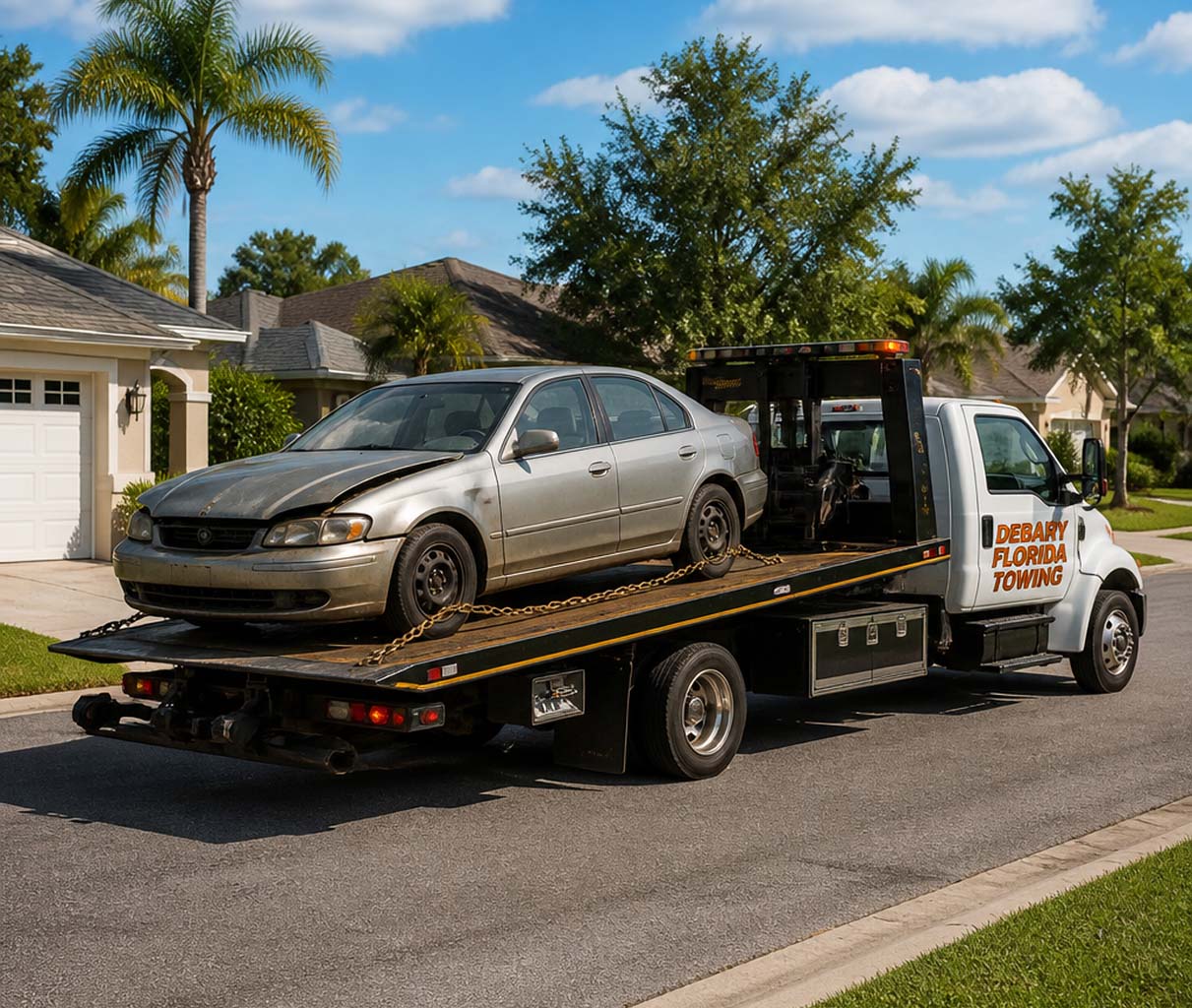
So the car in your driveway will not start, is not worth fixing, and has quietly become a place for spiderwebs to gather. In DeBary that is a familiar story, and getting rid of a dead vehicle in Florida is more straightforward than most people expect once you know the paperwork and the rules. Below are the questions DeBary drivers ask most often about junking a car, answered plainly so you can clear the driveway without second-guessing yourself.
What counts as a junk car in Florida?
A junk car in Florida is one that is inoperable and worth more as scrap metal or parts than as a working vehicle. State law draws a couple of related lines. Section 319.30 of the Florida Statutes defines junk as material that is, or once was, a motor vehicle, with or without its parts, that is inoperable and whose highest value is in its sale as scrap metal or for components. The same chapter describes a derelict vehicle as one that is at least ten model years old, worth under $1,000, and valued mainly for dismantling or scrap. If your car fits either description, it belongs in the removal conversation rather than the repair one.
Do I need the title to junk my car?
In almost every case, yes. The title proves you own the vehicle and have the right to dispose of it, so a reputable removal service will ask for it. Florida law expects the owner to surrender the certificate of title when a vehicle is destroyed or dismantled; section 319.30 requires that surrender so the state can cancel the record. If the title is lost, you can apply for a duplicate through the Florida Highway Safety and Motor Vehicles office that serves Volusia County before you schedule pickup. Some buyers will take a vehicle without a title under limited conditions, but expect to show registration and a photo ID, and expect a lower offer.
What paperwork do I need before pickup?
Gather three things: the title, a photo ID that matches the name on it, and your current registration if you still have it. Sign the title over to the buyer or dismantler exactly as the form directs, note the odometer reading and the date, and keep a photo or copy of the signed title for your own records. Sorting this out before the truck arrives keeps the pickup quick and protects you later if any question ever comes up about who owned the car and when it changed hands.
What should I do with the license plate?
Keep the plate; it does not travel with the car. In Florida the license plate belongs to you, not the vehicle, so take it off before the car is hauled away. You can transfer it to another vehicle you own or surrender it at a Florida Highway Safety and Motor Vehicles service center. Handling the plate is also the cleanest way to close out the registration, which matters when you drop insurance on a car you no longer have sitting in the driveway.
Should I cancel my insurance and registration?
Deal with the plate first, then the coverage. Once the car is gone and the plate is off, call your insurer to remove the vehicle from your policy so you stop paying for a car that no longer exists. Holding an active registration without insurance on a Florida vehicle can create its own headaches, so tying off both threads at the same time is the safe move. If you are replacing the junk car with another, your agent can often shift the coverage to the new vehicle on the same phone call.
How much is a junk car actually worth?
The offer on a junk car comes down to its weight in scrap metal, whether any parts are still in demand, and the going rate for scrap at the moment. A truly dead car with nothing salvageable brings a modest amount, while a vehicle that still runs, has a good catalytic converter, or carries sought-after parts brings more. Heavier vehicles carry more recyclable steel, which is why a full-size truck or SUV usually beats a small sedan on scrap value alone. A local company that pays cash on pickup will quote you based on the specific vehicle and current metal prices, so ask what the offer includes and whether towing is deducted, so you can compare a no-haul-fee quote fairly against one that subtracts the tow from your payout.
Should I repair the car, sell it, or junk it?
Junking makes sense only when repairs cost more than the car is worth, and that line is easy to cross with an older vehicle. A useful test is to weigh the repair estimate against what the car would sell for running: if an engine or transmission job costs more than the fixed vehicle would fetch, repair rarely pays off. A car that still starts but needs work will often sell for more privately than as scrap, so a quick listing is worth trying first. But when the vehicle will not run, has failed the kind of safety items that make it undrivable, or carries a salvage history that scares off buyers, removal for scrap is usually the cleaner and faster outcome, especially when a company hauls it off and pays you on the spot.
Where do junk cars near DeBary end up?
Volusia County has licensed dismantlers and scrap yards that handle end-of-life vehicles, and a removal service does the driving so you do not have to tow a dead car down I-4 or US 17-92 yourself. That matters when the vehicle will not roll onto a trailer or you do not own one to begin with. A local operator arrives with the right equipment, loads the car without dragging it, and delivers it to a facility that processes it legally. You skip the hassle of arranging transport, the risk of hauling an unregistered car on the highway, and the guesswork of finding a yard willing to come collect it in the first place.
What happens to the car after it is towed away?
Most junk cars go to a licensed dismantler or salvage yard, where usable parts are pulled and the shell is crushed and sold as scrap metal. When a vehicle is dismantled, Florida law treats it as permanently off the road: under section 319.30 the title is surrendered and the state cancels the record, and a certificate of destruction can be issued to document that the vehicle may never be retitled. That paper trail works in your favor, because it confirms the car is no longer registered to you or your responsibility.
Can the county junk an abandoned car for me?
That route exists, but it is meant for abandoned vehicles, not for a car you still own and simply want gone. Florida Statute 705.103 lays out how law enforcement handles a vehicle left on public property or someone else's land: officers post notice, contact the Highway Safety and Motor Vehicles department to identify the owner and any lienholder, and after the waiting period the vehicle can be sold or disposed of, with the owner left liable for the costs of removal, storage, and disposal. If the car is yours and sitting on your own property, it is far cheaper and simpler to call a removal service and hand over the title yourself.
How fast can I get a junk car removed in DeBary?
Usually within a day or two, and often the same day, once your paperwork is in order. A local crew can come to your driveway, verify the title and your ID, and haul the vehicle off in a single visit. If you would rather not rent a trailer or arrange transport on your own, DeBary Towing handles junk car removal across DeBary and Volusia County, frequently with cash paid on pickup, so a long-dead eyesore turns into a cleared driveway with one call.