
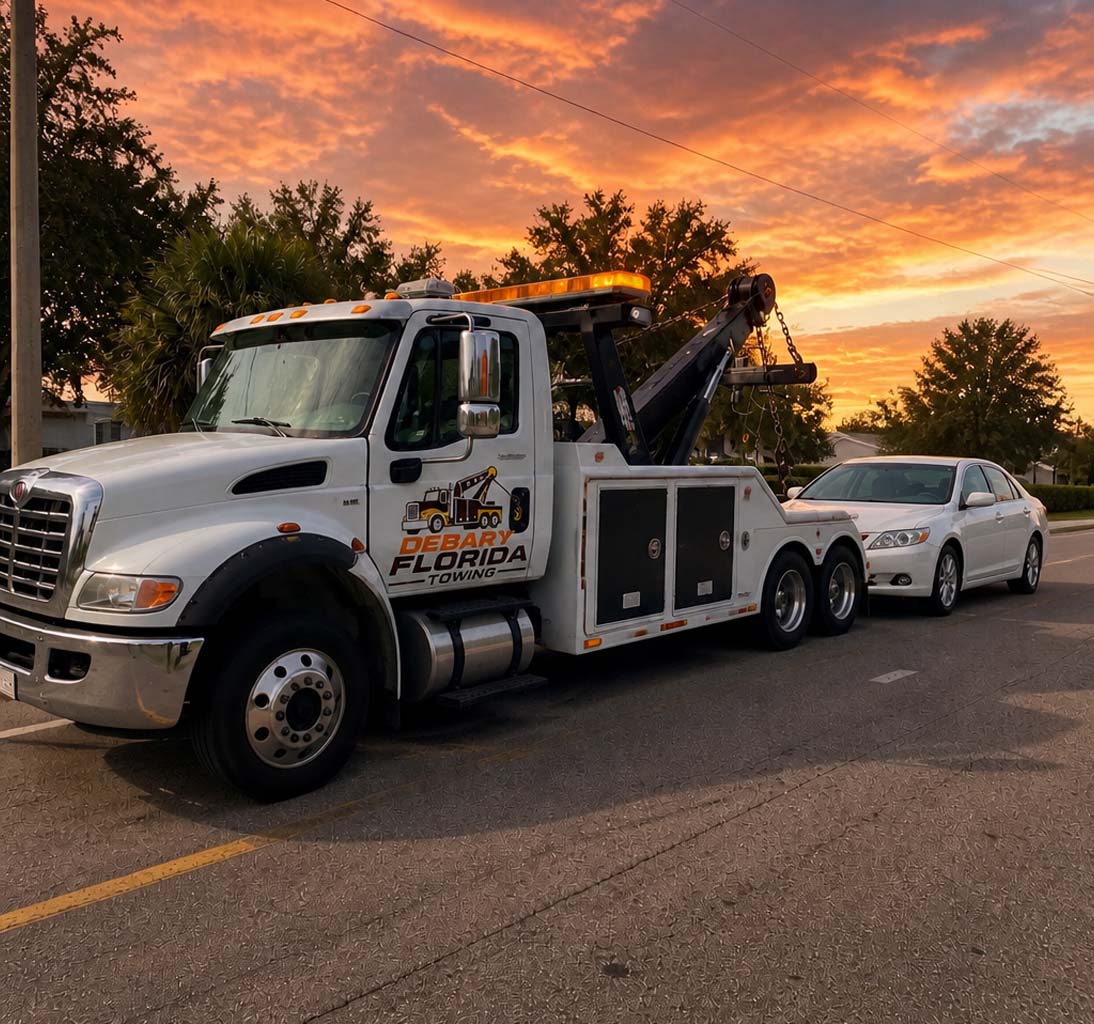
A breakdown in a 30-foot motorhome or a loaded work van is not a bigger version of a car breakdown. The vehicle is heavier than a tow operator's default assumptions, it is often taller and wider than the equipment expects, and there may be a family, a dog, and a week of belongings inside it on the shoulder of I-4.
Medium-duty towing exists for this gap between a passenger car and a semi. Knowing what it involves changes what you say on the phone, and that changes what shows up.
Medium-Duty Is a Weight Class, Not a Bigger Wrecker
Medium-duty covers the vehicles too heavy for a standard light-duty truck and too light to need a heavy recovery rig: box trucks, shuttle buses, ambulances, larger work vans, dually pickups, and most motorhomes short of the largest diesel coaches. The rig sent for them has a higher-capacity boom, wheel-lift, and underlift than the truck that handles sedans.
Sending the wrong class is the common failure, and it costs an hour. A light-duty wrecker dispatched to a loaded box truck cannot safely lift it, so the crew leaves and a second truck is dispatched, while the vehicle sits in the same place it was. Telling dispatch the vehicle type, whether it is loaded, and roughly what it weighs prevents that entirely.
Size Is the Constraint Nobody Plans For
Once a vehicle is on a tow rig, it gets taller and longer, and Florida caps both. Florida Statutes section 316.515 limits total outside width to 102 inches, sets a maximum height of 13 feet 6 inches including the load, and allows motor homes up to 45 feet in length, with straight trucks at 40 feet and up to 68 feet when towing one trailer.
Those numbers decide the route. An RV already close to 13 feet tall cannot simply be lifted onto a deck and driven under every overpass on the way to a shop, so a medium-duty tow of a tall vehicle is usually done with the wheels down under an underlift rather than on a flatbed. It is also why the operator asks for the height and length of your coach before choosing equipment.
Where the Straps Can and Cannot Go
On a motorhome or a van, the attachment points are structural and specific. Recovery and tow connections go to the frame or to rated recovery points, never to a bumper, a step, a tow hitch receiver used as a lifting point, or the lightweight body structure that makes up most of an RV's visible exterior.
Drivetrain rules matter just as much. Many RVs and work vans cannot be towed with drive wheels on the ground, or can only be towed that way under specific conditions set by the chassis manufacturer, so the axle that stays down is not a free choice. The owner's manual and the chassis plate settle it, and a good operator asks for both before deciding how the vehicle rides.
What About the Car Being Towed Behind the Coach?
When a motorhome quits with a vehicle in tow behind it, that is two recoveries, and the second one has its own rules. Florida Statutes section 316.530 caps the drawbar or other connection between two vehicles at 15 feet, requires safety chains or cables meeting federal standards, and requires a white flag or cloth at least 12 inches square where the connection is made with chain, rope, or cable.
Practically, the towed car is usually disconnected and dealt with separately, because a wrecker hauling a coach cannot also drag its dinghy legally or safely. That means a second truck or a second trip, and it is the detail most likely to be missed when the call comes in. Mention the towed vehicle when you first describe the situation so dispatch plans for both, rather than discovering the second car when the driver pulls up on the shoulder.
Tires Are the Most Common Reason for These Calls
Large vehicles carry heavy loads on tires that often sit unused for months, which is a combination that fails. NHTSA advises checking the pressure of all tires including the spare at least once a month when the tires are cold, notes that some vehicle and tire manufacturers recommend replacing tires that are six to ten years old regardless of tread wear, and points to the Tire and Loading Information Label on the driver's door edge or post for the vehicle's load limits.
The age point is the one RV owners miss, because an RV tire usually times out long before it wears out. The last four digits of the DOT code on the sidewall give the week and year of manufacture, and a coach that has been parked since 2018 may have plenty of tread on tires that no longer have the structural integrity to carry a loaded chassis down I-4 in August heat.
What Happens to Everything Inside
An RV in transit on a tow is not a vehicle anyone rides in, and that surprises people who assume they can stay aboard. Passengers ride in the truck cab or follow separately, which means planning for the pets and the people before the tow starts, not after the rig is hooked.
Interiors also need securing. Cabinet latches, a refrigerator door, and anything on a countertop will move during a tow, and propane should be shut off at the tank before the vehicle is transported. Take medications, documents, laptops, and anything else you cannot be without out of the coach, because the vehicle may sit at a repair facility longer than you expect.
Where a Big Vehicle Can Actually Be Taken
The destination is part of the dispatch decision, not an afterthought. Not every repair shop around DeBary can accept a 35-foot coach or a box truck: the yard needs the turning room, the bay needs the door height, and the shop needs to work on that chassis, which for a motorhome often means a truck or RV specialist rather than a general garage.
Distance matters here in a way it does not for a car. If the nearest shop that can take the vehicle is in Sanford or DeLand rather than DeBary, that is a longer tow at a medium-duty rate, and it is worth confirming the receiving facility will accept the vehicle before it is loaded. Arriving at a closed gate with a 20,000-pound vehicle on the hook means paying for the trip twice.
Storage is the other half of that question. A coach or box truck that cannot be repaired the same day needs somewhere secure to sit that can physically accommodate it, and lots with room for a 35-foot vehicle are not evenly spread across Volusia County. Ask where the vehicle will be held and what access you will have to it, particularly if you are living in it.
The Check That Prevents the Call
If you own something in this weight class, the highest-value ten minutes you will spend is reading the DOT date codes on every tire, including the spare, and comparing them against how the vehicle has been stored. Sun, heat, and long stationary periods age a tire on a schedule of their own, and Florida supplies all three. Pressure checked cold, load limits read off the door label, and a hard look at anything past its date will prevent more roadside calls than any other habit.
Keep the chassis manufacturer's towing page photographed on your phone as well, so the information the operator needs is available at the roadside instead of in a binder at home. When a van or coach does quit somewhere between DeBary and the interstate, that is what medium-duty towing from DeBary Towing is equipped for, and if it has stopped in a live lane, ask for emergency towing so the traffic problem gets solved first.